Inside the Black Box: How This Vital Device Helps Solve Air and Helicopter Crashes
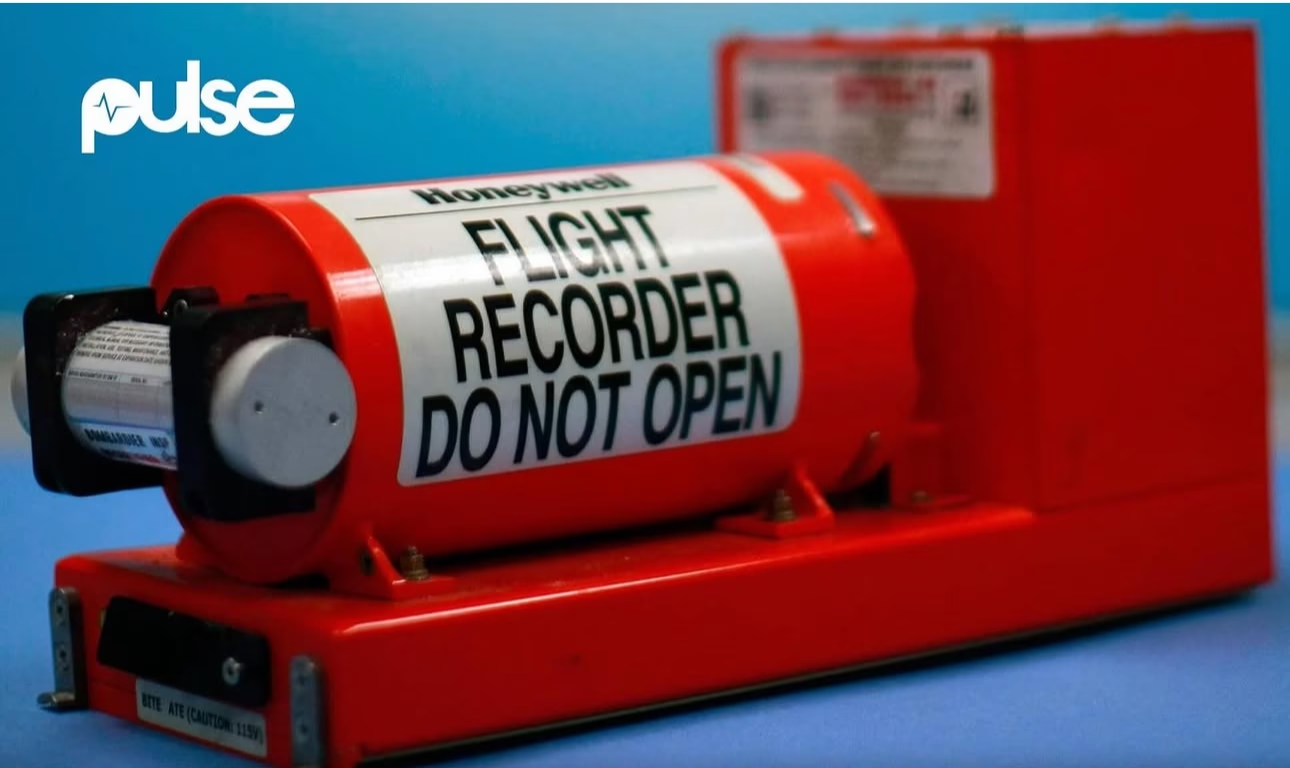
In the aftermath of any plane or helicopter crash, one term dominates headlines: the black box. Despite its name, this crucial piece of technology isn’t black at all—usually bright orange for visibility—but it holds the dark secrets of what happened in the final moments before a crash.
Whether aboard a commercial jetliner or a private helicopter, black boxes—officially called Flight Data Recorders (FDR) and Cockpit Voice Recorders (CVR)—are essential tools for aviation investigators. They help unravel mysteries and prevent future disasters.
What Is a Black Box?
A black box is actually two separate devices:
- Cockpit Voice Recorder (CVR): Captures audio from the cockpit, including pilot conversations, radio transmissions, engine sounds, and alarms.
- Flight Data Recorder (FDR): Logs crucial flight information such as altitude, speed, direction, engine performance, and control movements—typically hundreds of parameters, updated multiple times per second.
Both are encased in rugged, fireproof and waterproof boxes that can survive extreme conditions—including high-impact crashes, deep-sea submersion, and fires exceeding 1,100°C (2,012°F).
How Does It Work?
Once an aircraft takes off, the black box automatically starts recording. The CVR usually captures the last two hours of cockpit audio, while the FDR can store 25 hours or more of data, depending on the aircraft and equipment.
In helicopters and smaller aircraft, black boxes are sometimes simpler but still record vital flight details. In modern systems, some helicopters also use lightweight combined units known as Crash-Survivable Memory Units (CSMUs).
If a crash occurs, investigators recover the black box and send it to a laboratory—often the National Transportation Safety Board (NTSB) in the U.S. or other aviation authorities globally. Technicians download the data, reconstruct the timeline of the flight, and listen to the final moments to piece together what went wrong.
Why Is It So Important?
The black box often provides the first real answers after a crash. It helps determine if the cause was mechanical failure, weather, pilot error, or other external factors. In many cases, it leads to safety improvements in aircraft design, pilot training, or operational procedures.
For example, after the 2009 Air France Flight 447 crash over the Atlantic, the black box—recovered two years later from deep underwater—revealed vital insights into pilot response errors and sensor malfunctions, prompting major changes in aviation safety.
Calls for Real-Time Data Transmission
While black boxes are invaluable, they are only useful if recovered. This has led to calls for real-time data streaming or cloud-based flight recording systems, especially in remote or oceanic regions. Some newer aircraft are being fitted with systems that transmit key data to satellites during flight, supplementing traditional black boxes.
Conclusion
From commercial jets to helicopters, the black box remains the silent witness to aviation disasters—critical for telling the untold story when no one else can. It’s not just a tool for finding blame, but a beacon for learning and improving the safety of air travel worldwide.