

Ghana Urged to Consider Using Pension Funds to Revamp Extractive Industries
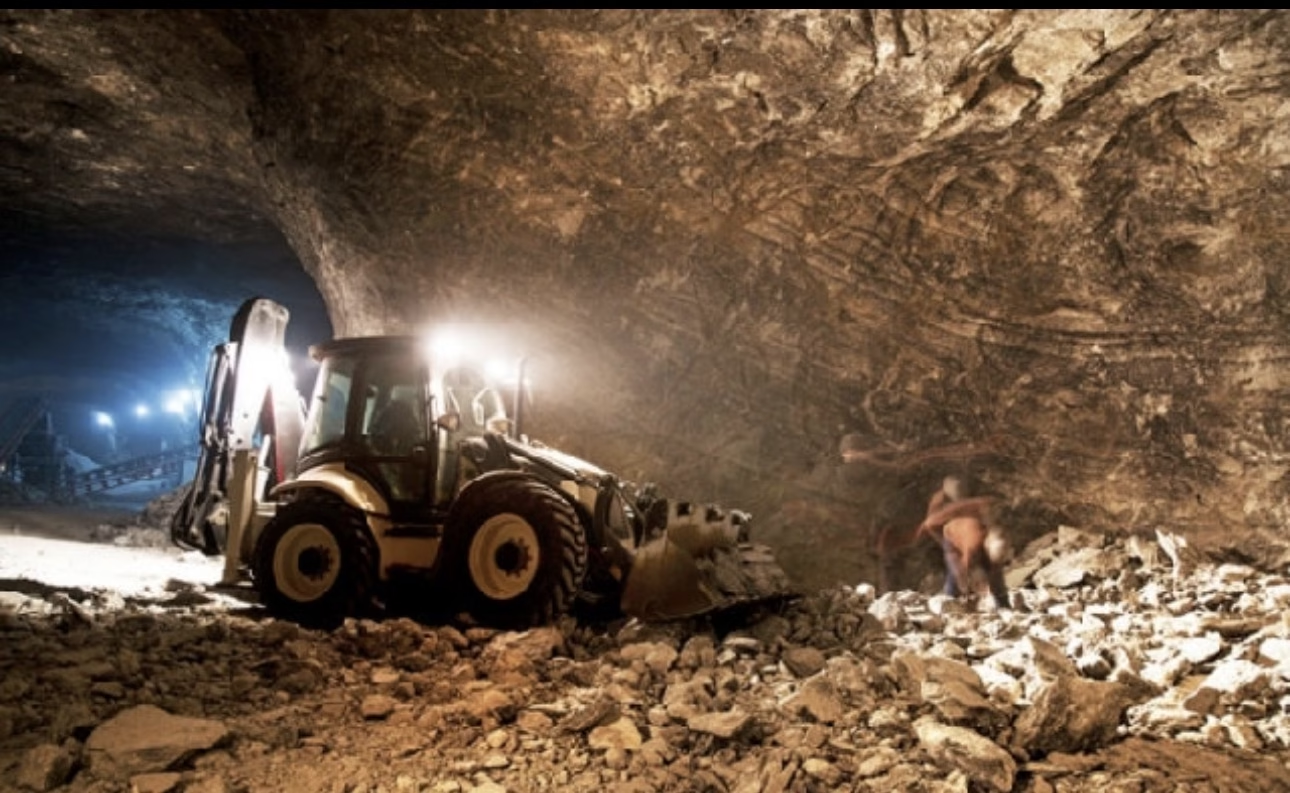
Policy analysts and industry observers are calling on government to explore the strategic use of pension funds to support Ghana’s extractive industries, arguing that a well-structured investment framework could unlock massive capital for mining, oil and gas, and related value-addition sectors.
The discussion, which has been gaining momentum in recent months, highlights the growing need for long-term, affordable financing to boost local participation, modernize mining methods, expand downstream processing, and curb the country’s heavy reliance on foreign capital.
A New Model for Sustainable Financing
According to experts, Ghana’s extractive sector — particularly gold, manganese, bauxite, and emerging lithium prospects — requires significant capital injections to expand operations and invest in environmentally sustainable technologies.
However, they argue that foreign financing often comes with restrictive conditions, profit repatriation pressures, and limited Ghanaian ownership.
Using a portion of tier-two and tier-three pension funds, under a transparent and risk-managed structure, could provide a stable, long-term financing model similar to what countries like Canada and Norway have successfully implemented in their resource sectors.
Managing Risk Through Strong Oversight
Specialists are quick to caution that pension funds must never be exposed to reckless or politically driven decisions.
They recommend:
- Establishing an independent Extractive Investment Board to evaluate all projects.
- Allocating funds only to low-to-medium-risk ventures such as infrastructure, refinery expansion, and community mining modernization.
- Enforcing strict ESG (Environmental, Social, and Governance) requirements.
- Ensuring returns flow directly into Ghanaian pension holders’ accounts.
Economists argue that with proper safeguards, these investments could deliver strong, predictable returns while strengthening Ghana’s economic independence.
Boosting Local Content and Job Creation
Industry players believe that pension-fund-backed investment could:
- Enhance local ownership in mining and petroleum operations
- Create thousands of skilled jobs
- Support domestic refinery projects
- Reduce capital flight
- Improve community development outcomes in mining regions
Communities battling illegal mining (galamsey) also stand to benefit, as more funding could go into mechanized community mining schemes, reclamation, and environmental protection.
Government Yet to Announce Position
While the idea has attracted interest from policy think tanks, labour unions, and financial experts, the government has not yet issued an official statement on whether it intends to adopt the proposal.
Stakeholders are urging the Ministries of Finance, Lands and Natural Resources, and Employment & Labour Relations to open formal consultations to assess feasibility.
A Turning Point for Ghana?
As Ghana navigates economic pressures and attempts to strengthen local control over its natural resources, many analysts say pension-fund investment could become a turning point — if executed wisely.
They argue that Ghana has the opportunity to develop a uniquely African model that protects workers’ retirement incomes while accelerating national development through responsible, well-regulated resource management.
Nsemgh.com will continue to monitor this developing story.