Western Region: Rubber Farmers Association denounces export ban call
The Rubber Farmers Association of Ghana (RUFAG) has publicly rejected claims that raw rubber exports are occurring “unchecked.”
The association argues that such allegations—suggesting that these exports undermine local processing and threaten Ghana’s industrialisation, resulting in annual losses of up to US$100 million—are baseless.
RUFAG states that the processors’ demand for a complete ban on raw rubber exports is not in the country’s best interest. Instead, the association believes it is a tactic to monopolise the market, reduce competition, and manipulate prices to force farmers to accept lower payments for their rubber cup lumps.
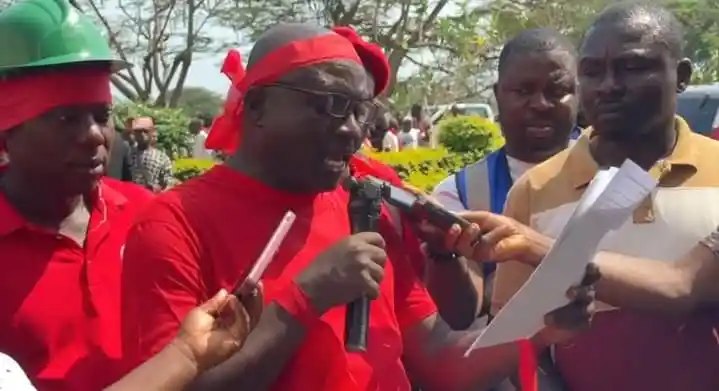
During a protest, RUFAG members wore red shirts and bands, carrying placards with messages such as:
• “No Difference Between Processors and Exporters”
• “Mr President and Minister, Do Not Listen to the Processors’ Lies”
• “Raw Rubber Trade is for Ghanaians, Not the Chinese”
• “Let Them Produce Our Tyres If We Ban Exports”
• “Save Our Rubber Farmers”
In a petition submitted to the President and the Minister of Trade and Industry, RUFAG Secretary Michael Nyarku argued that the call for a ban on raw rubber exports was not protective of industrialisation.
He characterised it as a strategy to monopolise the market and suppress fair competition. Nyarku also disputed the notion that processors are the main job creators in the sector, stating that processing plants employ fewer than 1,000 people while the farming sector supports hundreds of thousands.
He remarked, “The so-called processors, we call buyers. Their push for an export ban is not protecting national interests. It is a deliberate attempt to monopolise the market.”
RUFAG also pointed out that Ghana currently lacks advanced rubber processing facilities, questioning what processors claim to be doing locally. Nyarku highlighted a concerning trend where farmers are leaving rubber tapping for informal gold mining (galamsey) due to low wages driven by depressed rubber prices.
The association argues that true industrialisation relies on innovation, investment, and competitiveness, rather than protectionist measures that harm farmers.
In response, Western Regional Minister Joseph Nelson expressed the government’s commitment to ensuring the interests of rubber farmers are safeguarded.
He assured the association that all issues in the rubber industry would be addressed comprehensively to promote progress.
“As you are all aware, His Excellency John Dramani Mahama and his government did not assume the reins of government to collapse the rubber business. We recognise that the rubber industry comprises farmers and other related stakeholders. So the president will address all issues in the rubber industry in its entirety to foster progress”, Nelson said.