Ghana Helicopter Crash Sparks Mourning, Debate, and Conspiracy Theories
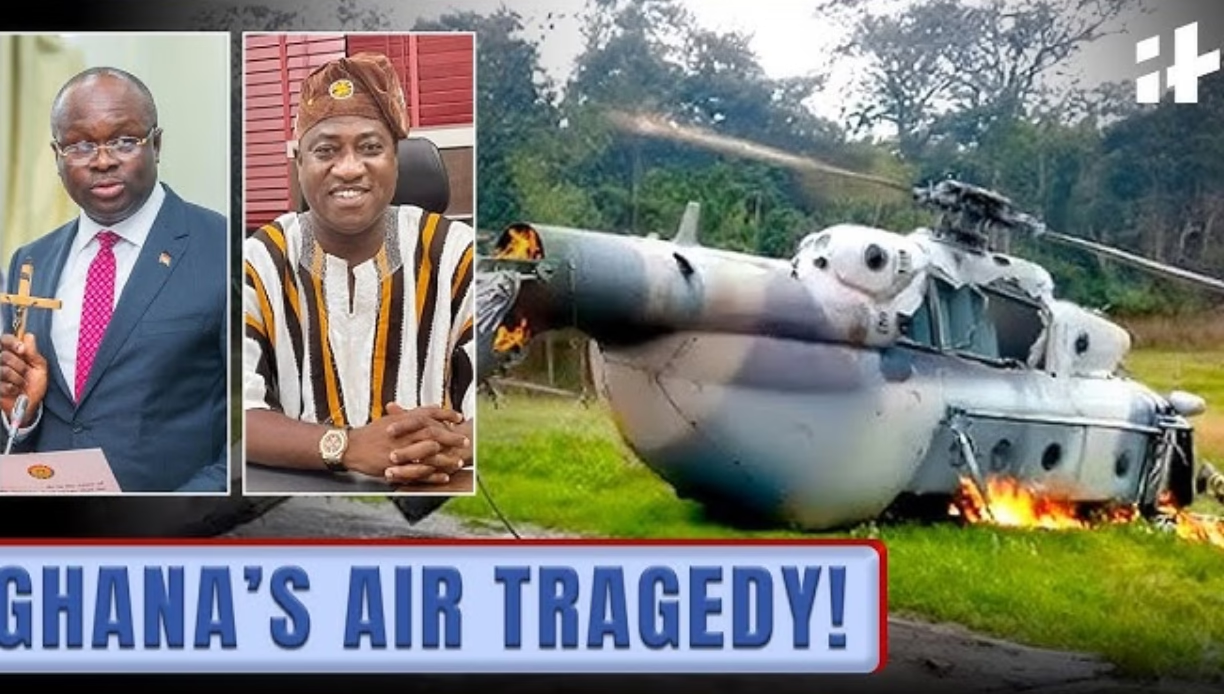
Ghana is reeling from a tragic helicopter accident that claimed the lives of eight distinguished current and former public officers, plunging the nation into deep mourning.
While the cause of the crash remains under investigation, the tragedy has ignited a wave of conspiracy theories and policy proposals. Among them, the Trade Unions Congress (TUC) has called for the immediate purchase of a new fleet of military aircraft.
However, aviation expert and policy analyst Bright Simons has cautioned against rushing to replace the crashed Harbin Z-9EH helicopter. He notes that the aircraft was one of four modern helicopters acquired in 2015 from China’s CATIC for protecting Ghana’s oil fields—making it only 10 years old. By comparison, the average U.S. military aircraft is over 28 years old, and the widely deployed Black Hawk helicopters average 18 years in service.
“Maintenance is critical,” Simons stressed, “but if Ghana has a maintenance problem, that can’t be fixed by just buying new aircraft. A more holistic plan is required.”
Early reports from the Ghana Armed Forces indicate that radar contact was lost moments after take-off. Although the flight data and cockpit voice recorders—commonly known as “black boxes”—have been recovered, it is unclear whether all logs are intact.
Simons warns that losing radar contact so early deprives investigators of crucial “Mode S” ground radar data, forcing heavy reliance on onboard recorders. Drawing parallels with a 2014 helicopter crash near Takoradi, he recalls that the recovered black box in that case contained only irrelevant data from 2010, leaving major gaps unexplained. That investigation ultimately determined engine fire as the cause through wreckage analysis.
In the current case, extensive damage and apparent tampering at the crash site heighten concerns over data integrity. The lack of information on whether an emergency signal was transmitted (7700 code) adds to the uncertainty.
Simons maintains that until the inquiry is complete, no conclusions can be drawn about whether the crash resulted from mechanical failure, transponder malfunction, pilot decision-making, or other causes.
He believes speculation will persist if the black boxes do not yield comprehensive information. Nonetheless, he insists that age was “definitely not the determinative factor” and that the tragedy should not be used as justification for immediate procurement of new helicopters.
“May the blessed departed rest in perfect peace,” Simons concluded.