

U.S. Imposes $100,000 Fee on H-1B Entry: What It Means for Ghanaian Professionals
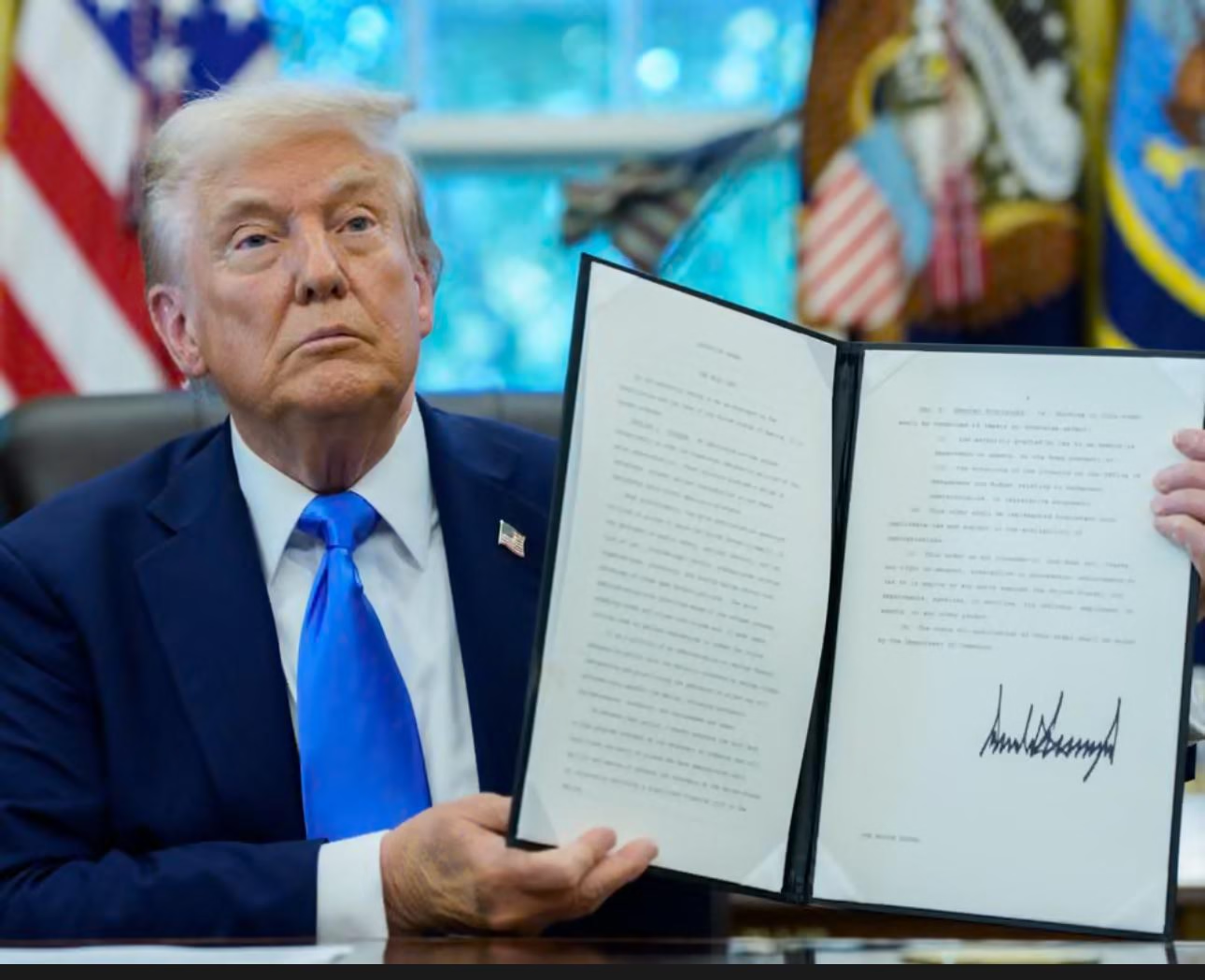
In a groundbreaking move, U.S. President Donald Trump has issued a proclamation that, effective September 21, 2025, will restrict entry of many foreign workers under the H-1B visa program unless their employer pays a $100,000 fee. The decision has sparked shockwaves across the global tech industry and may severely affect professionals from Ghana and beyond seeking to work in the U.S.
What is the new rule?
The proclamation, titled “Restriction on Entry of Certain Nonimmigrant Workers,” mandates that H-1B petitions for individuals outside the U.S. must be accompanied by this $100,000 payment for entry to be granted.
The restriction applies to entry or attempted entry after the effective date (12:01 a.m. EDT, September 21, 2025) and remains valid for 12 months unless extended.
Agencies are instructed to deny entry to or withhold visa approval for H-1B workers whose sponsoring employers have not made the payment.
Who is affected?
Ghanaian or other foreign professionals outside the U.S. who are being sponsored for H-1B roles (especially in tech, engineering, IT) will find barriers unless their employer is willing to pay the fee.
Those currently in the U.S. under H-1B status might avoid the new requirements, at least for ongoing status or extensions, though travel and reentry could become risky. Analysts are still parsing the exact boundaries.
Some companies have already advised employees abroad to return to the U.S. before the new rules take hold.
Why is the U.S. doing this?
The Trump administration claims the measure is needed to protect American workers, arguing that the H-1B program has been abused by firms replacing U.S. jobs with cheaper foreign labor.
The new fee is also part of a broader immigration overhaul, including a proposed “Gold Card” visa for wealthy foreigners who can pay $1 million for U.S. permanent residency.
Challenges and criticisms
Many immigration law experts argue the administration may lack legal authority to impose such a fee without congressional backing or proper rulemaking.
Critics warn that the policy could discourage global talent from coming to the U.S., weaken innovation, and prompt companies to shift operations overseas.
Smaller firms and startups, which rely heavily on H-1B talent, may struggle to absorb the costs.
What Ghanaian professionals and stakeholders should watch
If you have an H-1B petition in progress and are outside the U.S., this change could affect your ability to enter. Consult immigration attorneys or sponsors.
If you are in Ghana and aiming for U.S. employment through H-1B, your options might shrink unless your prospective employer is extremely confident or financially able to comply.
Universities, tech companies, and recruitment agencies in Ghana should take note: if U.S. demand for foreign talent declines, competition may intensify.
Closing / Outlook
While Trump’s proclamation is now official, its real-world impact will depend on how it is enforced, whether courts block it, and whether Congress intervenes. For many Ghanaian professionals, this marks a sudden shift in the U.S. work visa landscape — one that could close doors previously open. One thing is certain: those hoping to work in the U.S. will need to be more strategic and vigilant in the months ahead.