Beyond the Rains: How Ghana Can Finally Solve Its Flooding Crisis
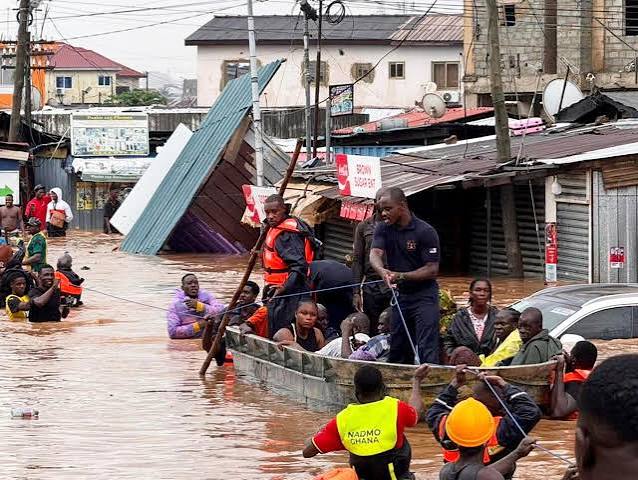
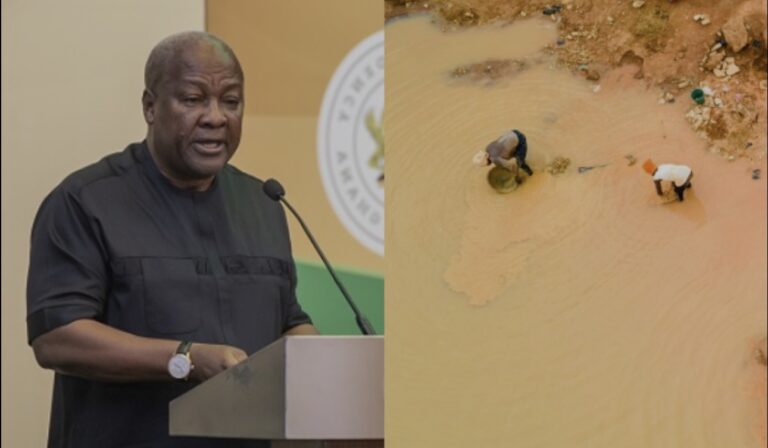
Every rainy season, the same story unfolds: streets become rivers, homes disappear under muddy water, and families are forced onto rooftops with whatever they can salvage. On June 29, 2026, it happened again — torrential rain, described by President John Dramani Mahama as one of the most intense single-day downpours Accra has experienced in years, submerged Kaneshie, Odawna, Adabraka, and the Kwame Nkrumah Circle enclave, claiming lives and destroying livelihoods within hours. For many Ghanaians, the most troubling part isn’t the scale of the disaster — it’s how familiar it has become.
Flooding is not new to Ghana. It ranks among the country’s most persistent natural hazards, with the worst episodes in the past two decades hitting in 2007, 2010, 2011, 2015, and 2020. Yet despite decades of drain-desilting exercises, awareness campaigns, and committee reports, the same communities flood whenever the rains return. So what would it actually take to break the cycle?
Understanding Why Accra Keeps Drowning
Experts agree that Ghana’s floods are not simply a matter of heavy rain — they are the product of decades of layered, largely man-made failures.
Lost wetlands and natural drainage. Accra historically depended on an interconnected system of lagoons, marshes, and floodplains — including the Korle Lagoon, the Kpeshie Lagoon, and the Densu Delta Ramsar Site — that absorbed and slowly released stormwater. Much of this natural buffer has been drained and built over, particularly around the Odaw River basin and the Sakumono Ramsar wetlands, leaving rainwater nowhere to go but through streets and homes.
Undersized, ageing drainage infrastructure. One professional engineering assessment attributes roughly 30% of Accra’s flood risk to insufficient drainage design alone — the city’s major drains were engineered for storms with a 25% chance of occurring in a given year, while modern cities increasingly design for far more extreme, low-probability events. Retention ponds and detention basins, which temporarily hold stormwater before releasing it gradually, are almost entirely absent from Accra’s infrastructure.
Impervious surfaces and runoff. As tiled compounds have become a marker of status, permeable ground across the city has steadily given way to concrete and asphalt. Rainfall that once soaked into the earth now runs off immediately into an already-strained drainage network — a factor some engineers estimate accounts for around a quarter of the city’s flood vulnerability.
Construction on waterways. A persistent gap in enforcing land-use regulations has allowed development within natural floodplains and drainage corridors never meant to be built on. Demolitions of such structures between 2009 and 2015 made headlines, yet new developments have repeatedly re-emerged in the same locations once attention moves on.
Waste and clogged drains. Poor solid waste management means drains built to carry stormwater are frequently choked with plastic and silt, though experts caution this is a compounding factor rather than the primary driver of Accra’s floods.
Climate change. President Mahama himself pointed to changing weather patterns as a central factor, noting that the rainfall recorded on June 29 — around 140mm in a single day — dwarfed the highest daily total recorded in all of 2025, which stood at just 56mm. “This means our waterways no longer have sufficient time to recover before more rain falls,” he said.
What Real Solutions Look Like
Encouragingly, there is little disagreement among engineers, journalists, and civic groups about what needs to happen — the challenge has always been implementation. A comprehensive solution would need to combine engineering, governance, and household-level action.
1. Modernise and expand drainage infrastructure
Ghana needs to move beyond seasonal drain-desilting toward drainage systems engineered for the intensity of rainfall the country now experiences, including underground stormwater storage tunnels at key points that can hold water temporarily before releasing it in a controlled way.
2. Protect and restore wetlands and natural waterways
Reclaiming encroached wetlands and river basins — including renewed protection for the Odaw basin and Sakumono wetlands — would restore natural buffers that no amount of concrete drainage can fully replace.
3. Enforce land-use and building regulations without exception
Experts and civic groups alike say the laws already exist; what’s missing is consistent enforcement, including holding accountable the officials who approve permits for construction on waterways and drainage reservations. The Ghana WASH Journalists Network has explicitly called on government to remove structures obstructing waterways and hold negligent officials accountable, describing the recurrence of flood tragedies as “unacceptable.”
4. Reduce impervious surface coverage
Strengthening building codes to mandate runoff reduction — such as requiring permeable paving or on-site water retention for new developments — would slow the speed at which rainfall reaches already-strained drains.
5. Improve solid waste management
While not the primary driver, better waste collection and public education on refuse disposal would help drains retain the capacity they were designed for.
6. Invest in flood forecasting and early warning systems
Stronger coordination between the Hydrological Services Authority, Town and Country Planning, and local assemblies could give residents in flood-prone areas critical hours of warning before disaster strikes.
7. Build financial protection alongside physical infrastructure
This is a solution that gets far less attention but is already designed and ready to go: parametric flood insurance for Greater Accra, developed through collaboration between Ghana’s Ministry of Finance, the UNDP, and international insurance partners. With roughly seven out of ten Ghanaians lacking any insurance coverage, a single flood can wipe out years of a household’s financial progress. The UNDP has urged government to operationalise this model urgently, noting that the technical work is already complete — what remains is political will to implement it.
8. Address population pressure on Accra directly
In the wake of the June floods, President Mahama announced plans to relocate some major state institutions outside Accra and develop a new growth centre over the next two decades, complete with roads, electricity, and water infrastructure, to ease the population pressure that has outpaced the capital’s drainage capacity.
The Missing Ingredient: Political Will
Perhaps the most sobering point made by flood researchers and journalists alike is that Ghana already has the knowledge and engineering expertise required to solve this problem — what has been missing is sustained political follow-through. As one long-time Ghanaian journalist put it, Accra’s flooding problem is systemic, reflecting weaknesses across “urban planning, enforcement, sanitation, infrastructure maintenance, environmental protection and collective civic responsibility” — meaning the solution cannot remain seasonal drain desilting whenever the rains begin.
President Mahama has acknowledged this directly, warning against the trap of behaving “like the proverbial vulture that says it will repair its roof after the rains, only to forget about it once the weather clears,” and pledging that “this time, we must act differently.”
What Ordinary Ghanaians Can Do
While the bulk of the solution rests with government action and enforcement, civic groups have urged citizens to do their part too: stop dumping refuse into drains, reduce plastic pollution, and avoid building or buying property on waterways and drainage reservations, even where enforcement is currently weak.
The Bottom Line
Ghana’s flooding crisis is not a mystery to be solved — it is a known problem with known solutions that require coordinated, sustained investment rather than another round of post-disaster promises. Modern drainage engineering, restored wetlands, strict enforcement of building codes, flood insurance, and long-term urban decongestion all exist as viable, evidence-based paths forward. The question that will determine whether next year’s rainy season brings a different story is not whether Ghana knows what to do, but whether this generation of leaders — and citizens — finally follows through.
NsemGH will continue to track government action on flood mitigation and report on progress toward the lasting solutions Ghanaians have been promised for years.