Ghana’s Housing Deficit Tops 1.8 Million Units as Affordability Crisis Deepens
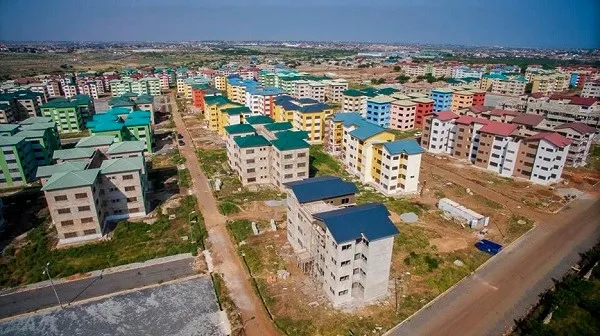
Ghana’s housing shortage remains one of the country’s most stubborn development challenges, with government figures putting the current deficit at over 1.8 million units even as rapid urbanisation continues to push demand higher every year.
The Scale of the Problem
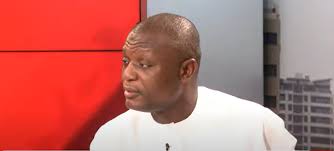
Speaking at the Government Accountability Series in January, Minister for Works and Housing Kenneth Gilbert Adjei confirmed that Ghana’s housing deficit stands at more than 1.8 million units, a gap he described as worsened by “widespread affordability challenges” that shut many low- and middle-income Ghanaians out of decent housing altogether. The minister pointed to rapid urbanisation as a key driver, noting that more than half the population now lives in urban areas, with that share projected to rise above 72% by 2050.
The pressure is especially acute in the country’s biggest cities. Population growth in Accra, Kumasi, and Tamale is expected to multiply significantly by 2030 compared to 2010 levels, and demand for housing in those cities has surged well ahead of what either government or private developers have managed to supply.
According to World Bank estimates, Ghana needs between 70,000 and 133,000 new housing units every year to keep pace with demand. In practice, the country is delivering only around a third of that need annually, leaving the deficit to accumulate year after year. The Ghana Real Estate Developers Association (GREDA) has calculated that closing the gap over a ten-year period would require roughly 170,000 new units annually — a target well beyond current construction capacity.
A Paradox: Shortage and Oversupply at Once
Perhaps the most striking feature of Ghana’s housing crisis is that it isn’t simply a story of too few houses. Industry analysts note that Ghana currently has both a 1.8-million-unit deficit and an estimated 1.3 million vacant dwellings sitting empty across the country. The explanation lies in mismatched pricing: much of what gets built targets the luxury end of the market, where developers can secure stronger margins, while the mid-market and affordable segments — where the real, unmet demand lies — remain chronically underserved. A middle-class professional earning a typical Accra salary simply cannot afford many of the homes currently on the market, even with mortgage financing, while high-end units sit vacant for want of buyers.
Mortgage penetration in Ghana remains extremely low, estimated at under 0.5% of GDP, further limiting how many Ghanaians can convert housing need into an actual purchase even where affordable stock exists.
What Government Is Doing About It
The government’s flagship response is the “My Home, My Peace” affordable housing programme, structured as a public-private partnership in which government provides land and basic infrastructure — roads, utilities, and drainage — while private developers finance and construct units for sale at capped, government-set price ceilings. The programme has active sites in areas including Pokuase and Amasaman in Greater Accra and Dedesua in the Ashanti Region, with unit prices for the lowest tier starting in the range of a few thousand dollars.
Separately, Cabinet has approved a pathway to finally complete the long-stalled Saglemi Affordable Housing Project, with several private companies bidding to take over construction after years of delay. The National Rental Assistance Scheme (NRAS), introduced to remove the burden of large upfront rent advances, and the National Housing Fund also remain part of the government’s broader toolkit for tackling the crisis.
Why the Deficit Persists
Researchers who have studied constraints on housing developers in Accra and Tema point to a mix of institutional bottlenecks: cumbersome land tenure arrangements, lengthy building permit procedures, and slow land acquisition and registration processes all discourage the pace of construction needed to meaningfully dent the deficit. High construction costs — driven by imported cement, steel, and fittings — combined with currency volatility have also made it harder for developers to build at price points ordinary Ghanaians can afford.
There is, however, a note of long-term progress. Academic research tracking housing quality in Ghana over the past two decades found that the share of households living in “highly deficient” housing has fallen over time, even as the overall unit deficit remains large — suggesting that while Ghana is not building enough new homes, the quality of existing housing stock has, on average, been improving.
The Road Ahead
With Ghana’s urban population continuing to grow by an estimated 3% a year and construction costs still elevated despite recent macroeconomic stabilisation, closing the 1.8-million-unit gap will require sustained investment well beyond current levels. For now, government programmes like My Home, My Peace and the revived Saglemi project represent incremental steps, but analysts agree the bulk of the country’s housing challenge lies in redirecting private investment away from an oversupplied luxury segment and toward the affordable and mid-market housing where millions of Ghanaians remain in genuine need.
NsemGH will continue tracking developments in Ghana’s housing sector, including government affordable housing initiatives and their impact on ordinary Ghanaians.