Carlos Queiroz Leaves Black Stars Role After World Cup Exit
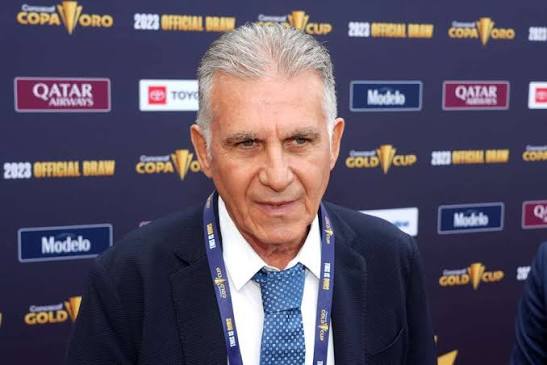
Carlos Queiroz’s short stint in charge of the Black Stars has come to an end, with the veteran Portuguese tactician leaving the role following Ghana’s round-of-32 exit from the 2026 FIFA World Cup.
A Deal Tied to World Cup Performance
Queiroz took charge of Ghana in April on a short-term contract due to run until August, with an agreement built around a performance-based clause: had the Black Stars reached the World Cup quarterfinals, his deal would have automatically extended by two years. Ghana’s exit at the hands of Colombia — beaten 1-0 in the round of 32 — meant those conditions were never met, effectively bringing his time with the team to a close.
Despite the disappointing finish, Queiroz struck a proud tone on his way out. “To the fans, we cannot claim complete sporting satisfaction, but we can proudly say that we honoured the colours of Ghana and restored respect and credibility to the Black Stars on football’s greatest stage,” he said, also thanking Ghana Football Association president Kurt Edwin Simeon-Okraku and the GFA’s Executive Council for the opportunity to lead the national team.
Asked at his post-match press conference in Kansas City what came next for him personally, the 73-year-old offered a characteristically dry response: “What’s next for me is to have a glass of water and relax, refresh for the next morning and start to make other decisions.”
How the Queiroz Era Unfolded
Queiroz was brought in following Otto Addo’s departure in April, after a run of heavy defeats — including 5-1 and 2-1 losses to Austria and Germany — convinced the GFA that a change was needed just months before the World Cup. Ghana turned to the former Real Madrid boss and Manchester United assistant, hoping his experience and organisational discipline would stabilise the team ahead of the tournament.
By most measures, Queiroz delivered on that immediate brief. Ghana finished third in a tough Group L containing England and Croatia, picking up a win over Panama, a goalless draw with England, and a narrow defeat to Croatia — enough to advance to the knockout stage as one of the best third-placed teams. It marked Ghana’s first appearance in the World Cup knockout rounds in 16 years, and Queiroz’s defensive setup saw the team concede just three goals in four matches, a marked improvement on the ten goals shipped in their last four games under Addo.
That defensive solidity, however, came at a cost. Ghana struggled to create sustained scoring chances throughout the tournament, managing only two goals across the campaign — both scored by a midfielder and a defender rather than the team’s attacking players. Captain Jordan Ayew finished the tournament without registering a single shot, on target or otherwise, a statistic that has fuelled debate over whether his long international career with the Black Stars should now come to an end.
How the Colombia Match Unfolded
Ghana’s exit came down to a single moment early in the contest. Right-back Marvin Senaya, one of the Black Stars’ most consistent performers and a nominee for Opta’s Best XI of the World Cup group stages, went down with an injury inside the opening ten minutes and had to be substituted. Colombia scored just a minute later, with Jhon Arias tapping in from close range after a driving move down Ghana’s right flank exploited the temporary disorganisation caused by the enforced change.
Queiroz was frank in assigning responsibility for the goal to that disruption. “The moment Senaya came off, the team did not have the same discipline and organisation,” he said. “It took Alidu Seidu a few minutes to adjust, and they took advantage of that moment to score.” Ghana finished the match without a single shot on target, managing just 0.26 expected goals compared to Colombia’s 2.06, despite a bright opening spell that saw Thomas Partey drag an early effort just wide.
Reflecting on the defeat overall, Queiroz was gracious toward the opposition. “I think the Colombian team controlled the game much better — their passing, their movement,” he said. “Generally speaking, the best team won the match.”
What Comes Next for the Black Stars
With Queiroz’s departure confirmed, attention now turns to who the GFA will appoint to lead Ghana into the 2027 Africa Cup of Nations qualifying campaign, which begins in September with a difficult away fixture against Ivory Coast in Abidjan. The Black Stars have been drawn in Group C alongside Ivory Coast, Gambia, and Somalia, a group that leaves little room for error as Ghana looks to avoid missing out on a second consecutive AFCON finals after failing to qualify for the 2025 edition.
For now, the GFA faces a familiar question: whether to build on the defensive foundations Queiroz leaves behind with a similarly experienced hand, or to use the coaching vacancy as an opportunity to hand the reins to a new generation of players and, potentially, a new tactical philosophy built around attacking talents like Mohammed Kudus and Antoine Semenyo, both of whom missed the World Cup through injury.
NsemGH will bring updates as the Ghana Football Association announces its next steps on the Black Stars’ technical leadership.