What Has the Iran War Cost Americans So Far?
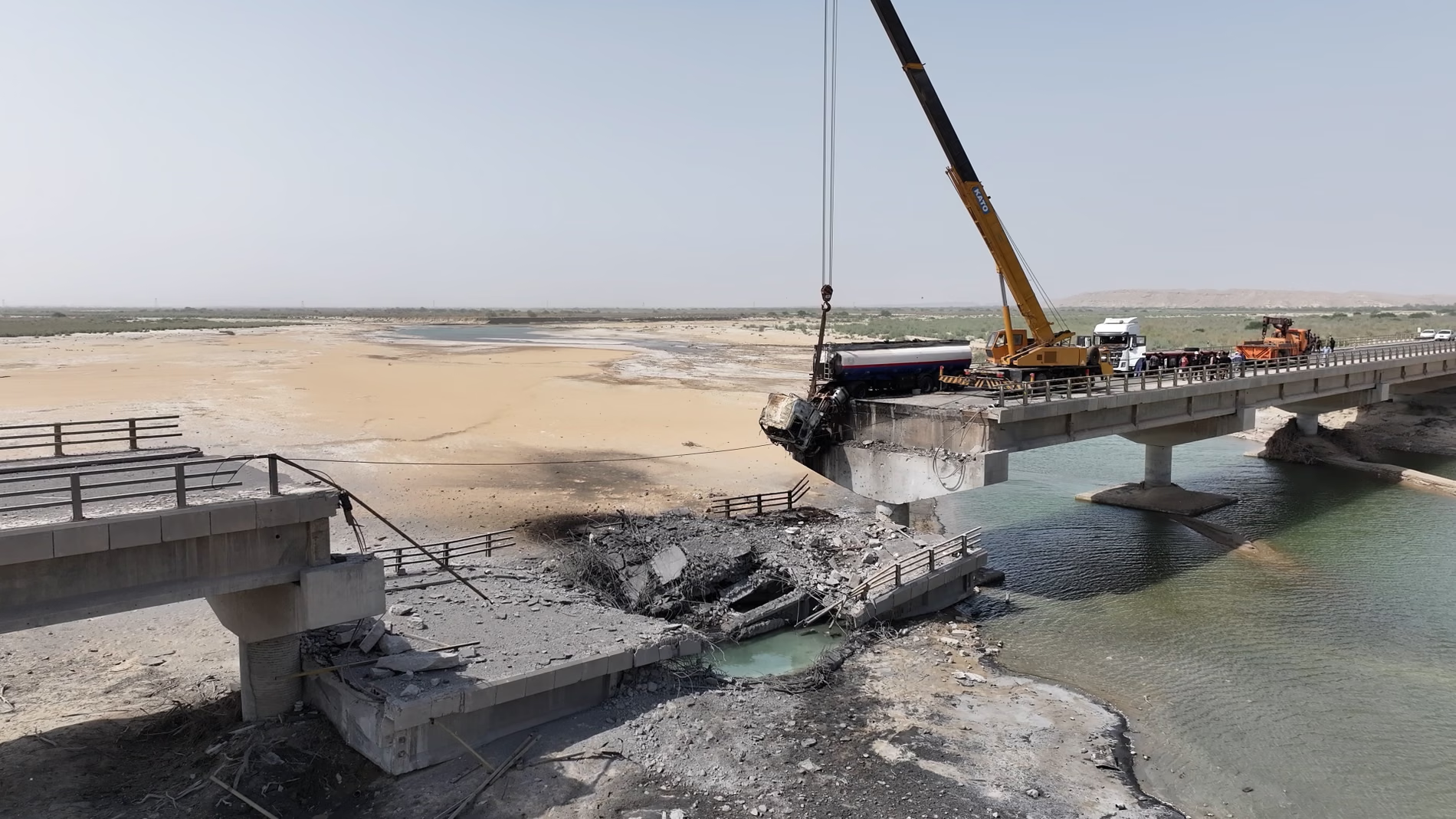
Nearly five months after the United States launched “Operation Epic Fury” against Iran, one question keeps resurfacing in Washington: how much has this war actually cost American taxpayers? The honest answer is that nobody fully agrees — official Pentagon figures, independent defence analysts, and economists tracking the broader economic fallout have landed on wildly different numbers, ranging from tens of billions of dollars to well over half a trillion.
How the War Started — and Why It’s Still Going

The conflict began on February 28, 2026, when US and Israeli forces launched coordinated strikes across Iran, aiming to destroy its nuclear infrastructure and decapitate its leadership. It followed an earlier, smaller strike campaign in late 2025 and rising tensions after Iran withdrew from the Nuclear Non-Proliferation Treaty in January 2026.
A ceasefire and 14-point memorandum of understanding were signed in mid-June, giving both sides 60 days to negotiate a lasting peace deal. That truce proved fragile. By mid-July, the US and Iran were again trading retaliatory strikes, and as of this week, US Central Command has carried out ten consecutive nights of strikes on Iranian targets — a sign that the financial toll is still climbing, not settled.
The Official Numbers: Tens of Billions and Rising

The Pentagon’s own disclosed figures have shifted upward repeatedly as the conflict has dragged on:
- In a closed briefing early in the war, Pentagon officials told lawmakers the first six days alone cost roughly $11.3 billion — about $1.88 billion per day.
- By June 30, the Defense Department’s official running total stood at around $30 billion.
- In more recent Senate testimony, Defense Secretary Pete Hegseth updated that figure to approximately $37.5 billion.
- Independent trackers modelling Pentagon briefings alongside CSIS and Congressional Budget Office data put direct military costs somewhere in the $34–42 billion range for the war’s first phase, before the renewed July strikes.
Munitions have been the single biggest driver of these costs. Tomahawk cruise missiles run about $2–2.6 million apiece, and more than a thousand were reportedly fired. Missile defence has been even pricier: Patriot interceptors cost roughly $5 million each, THAAD interceptors around $12 million, and the Navy’s SM-3 interceptors — used to shoot down Iranian missiles before they re-enter the atmosphere — cost $28–36 million per unit, often used against Iranian drones worth a small fraction of that price.
Why Some Estimates Run Much Higher
Several analysts argue the official Pentagon numbers dramatically understate the true cost. Some assessments cited in recent reporting suggest the real figure could run between $80 billion and $100 billion, once undisclosed operational expenses, lost aircraft, and damage to US bases across the Middle East are factored in. Reconstruction of damaged facilities alone — including US installations in Kuwait, the UAE, Saudi Arabia, Jordan, and Bahrain — could cost more than $30 billion by some estimates, with even a single facility, the US Navy’s Fifth Fleet headquarters in Bahrain, estimated to need around $200 million in repairs.
Zoom out further, and the numbers grow even larger. Democratic lawmakers and a number of economists argue that once the broader economic impact is included — oil market disruption through the Strait of Hormuz, veterans’ long-term healthcare, lost economic output, and elevated fuel prices for ordinary Americans — the true cost to the US economy could range from $630 billion to as much as $1 trillion. For context, the US reportedly struck more than 13,000 targets in Iran over the war’s first 39 days alone, and disruption to Hormuz shipping — through which roughly 15 million barrels of oil pass daily — has been described as a bigger drag on the economy than the direct military spending itself.
The Fight Over Funding in Washington
The financial dispute isn’t just academic — it’s shaping a real fight in Congress. The Pentagon submitted a $87.6 billion supplemental funding request back in May, more than double the direct combat costs disclosed at the time. That request has since grown: the House Budget Committee advanced a $95 billion package in mid-July, bundling Iran war funding together with unrelated items like farm aid and new voter-ID provisions, on a party-line vote. Democrats have objected, noting the package includes no offsets to reduce the federal deficit, and several lawmakers — including Senator Angus King — have publicly criticised the Pentagon for failing to give Americans a clear, transparent accounting of what the war is actually costing them, including its knock-on effects on everyday costs like fuel prices.
The Bottom Line
So, how much has the Iran war cost Americans? If you’re going by the Pentagon’s own disclosed numbers, the answer is somewhere around $37–42 billion in direct military spending so far — and climbing again now that strikes have resumed. If you factor in undisclosed costs, base reconstruction, and lost equipment, credible estimates put the real figure closer to $80–100 billion. And if you widen the lens to the full economic toll — oil shocks, veterans’ care, and lost output — some economists argue Americans could ultimately be looking at a bill in the hundreds of billions, or even in excess of half a trillion dollars.
What’s clear is that with strikes still ongoing as of this week, none of these numbers are final — and the true cost of the war likely won’t be settled for years to come.