US Makes $20,000 Visa Bond Permanent for 50 Countries —Ghana Excluded
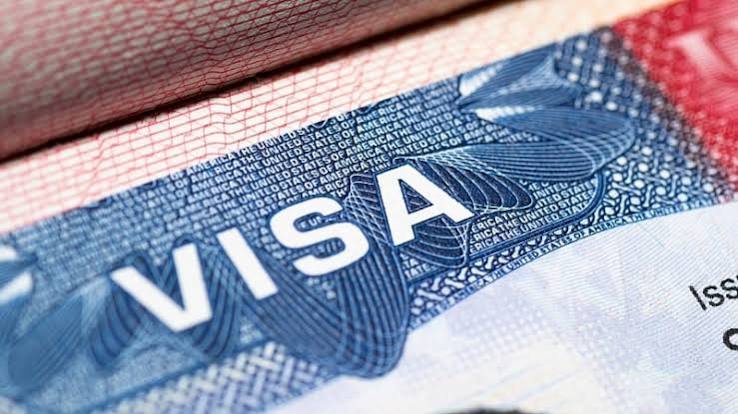
The Trump administration has finalised plans to permanently impose a visa bond of up to $20,000 on business and tourist visa applicants from 50 countries, the majority of them in Africa. The rule, published in the Federal Register on July 31, 2026, takes effect Monday, August 3 — turning what began a year ago as a limited pilot into a lasting fixture of US immigration policy.
What the Bond Actually Requires
Under the new permanent rule, consular officers can require B-1 (business) and B-2 (tourist) visa applicants from the affected countries to post a bond of up to $20,000 as a condition of visa issuance. This replaces the previous pilot structure, which offered three tiers — $5,000, $10,000, or $15,000 — based on a consular officer’s individual assessment. The final rule scraps the lowest $5,000 tier entirely and raises the ceiling to $20,000, meaning affected applicants could now face a steeper financial bar than at any point during the pilot phase.
Importantly, the bond is not automatically applied to every applicant, nor is the amount fixed by nationality alone. Consular officers weigh factors like the purpose of the trip, and the applicant’s employment, income, skills, and education, in deciding both whether to impose a bond and how much to set it at.
The bond is also refundable — but only under specific conditions. Travellers get their money back if their visa application is denied, if they don’t end up travelling before the visa expires, or if they comply fully with their visa terms and depart the US on time. Compliance also requires entering and exiting the US strictly through a commercial airport (including designated CBP preclearance locations); charter flights, general aviation, land crossings, and seaports don’t qualify.
Which Countries Are Affected
The full list has expanded steadily since the pilot launched with just two countries — Malawi and Zambia — in August 2025. By March 2026, it had grown to 50 nations after the addition of 12 more, including Ethiopia, Mozambique, Tunisia, Lesotho, Mauritius, and Georgia. Of the current 50 countries, 30 are in Africa, alongside others including Bangladesh, Nepal, Bhutan, Cuba, and Venezuela. Nigeria has remained on the list since the program’s early expansion in January 2026.
Notably, Ghana is not currently among the 50 designated countries, though the State Department has indicated the list may be expanded further using rolling 12-month visa overstay data — meaning inclusion isn’t guaranteed to stay off the table indefinitely.
Why the US Says It’s Doing This
Officials have framed the programme as a tool to curb visa overstays. The State Department pointed to Department of Homeland Security data showing that non-Visa Waiver Programme countries — the category most affected countries fall into — recorded an overstay rate of 2.06% in 2024, compared to just 0.44% for Visa Waiver Programme countries. For context, DHS reported 269,382 B-1/B-2 overstays in 2024 alone, excluding Mexico, Canada, and Visa Waiver Programme nations.
According to the State Department’s own notice, the year-long pilot “provided sufficient data to suggest that a visa bond programme is an effective tool for enforcing compliance among bonded visa holders” — the justification now being used to make the policy permanent rather than experimental.
The Real-World Impact So Far
The numbers from the pilot period tell a striking story. Visa issuance to nationals of pilot countries fell by a dramatic 83% between August 2025 and July 2026. Close to half of the roughly 20,000 applicants who came under the bond requirement during that period chose not to pay it at all — effectively abandoning their travel plans rather than post the deposit. Total bond payments collected during the pilot reached approximately $115 million.
Perhaps most tellingly, the programme reached ten times more people than officials originally projected — the government had initially expected only around 2,000 applicants to be affected, not the nearly 20,000 who ultimately were.
The Criticism
Immigration advocates have been blunt in their assessment, arguing the policy will deter legitimate travel rather than simply catching those likely to overstay. Rights groups have gone further, arguing that the broader pattern of the Trump administration’s immigration crackdown — including this bond programme — risks violating due process protections, creating an unsafe climate for ethnic minorities, and encouraging racial profiling in how bonds get applied.
The administration has defended the measures as necessary for national security, even as it has simultaneously made several forms of legal immigration and travel to the US markedly more expensive and complex — from this visa bond to the newly introduced $750 expedited interview fee for B1/B2 applicants at other posts.
The Bottom Line
For applicants across most of Africa and several other regions, a US visitor visa now comes with a much higher potential price tag than it did just two years ago — not through a non-refundable fee, but through a refundable deposit that many simply can’t afford to put up in the first place, judging by the pilot’s outcomes. With Ghana currently outside the list of 50 affected countries, Ghanaian applicants aren’t directly impacted for now — but with the State Department retaining the power to expand the list based on overstay data, it’s a policy worth watching closely rather than dismissing as someone else’s problem.
Source:
nsemgh
Conversation (0)
- Drop your opinion below.
You must be logged in to comment on this article.
Log In / Register