Mahama Reshuffles Cabinet and Parliamentary Leadership — What It Means for Government
President John Dramani Mahama has carried out the first major reshuffle of his administration, touching both his executive cabinet and the leadership of the Majority Caucus in Parliament. The changes, announced Friday, August 7, 2026, mark what the Presidency describes as an effort to realign government and strengthen the delivery of its programmes — but they also close a painful chapter that has hung over the administration for exactly one year.
The Executive Changes
At the centre of the reshuffle is the nomination of Dr. Zanetor Agyemang-Rawlings, Member of Parliament for Klottey Korle and daughter of the late former President Jerry John Rawlings, as Minister for Environment, Science, Technology and Innovation. She has held her parliamentary seat since 2017.
Alongside her nomination, Bawku Central MP Mahama Ayariga has been nominated as Minister for Local Government, Chieftaincy and Religious Affairs. In a significant reassignment, Kenneth Gilbert Adjei — until now Minister for Works, Housing and Water Resources — moves to take charge of the Ministry of Defence. Filling the gap he leaves behind, Ahmed Ibrahim, MP for Banda and outgoing Minister for Local Government, has been reassigned to head the Ministry of Works, Housing and Water Resources.
All the nominations have been submitted to Parliament through the Speaker in accordance with Article 78(1) of the 1992 Constitution, which requires parliamentary vetting and approval before any ministerial appointee can formally assume office.
Why Now: A Painful Anniversary
The timing of this reshuffle is no coincidence. The Defence and Environment, Science and Technology portfolios have both sat without substantive ministers since August 2025, following the crash of a Ghana Air Force Z-9 helicopter at Adansi-Akrofuom in the Ashanti Region on August 6, 2025 — a disaster that claimed eight lives, including the sitting Defence Minister, Dr. Ibrahim Murtala Muhammed, and the Environment Minister at the time. Friday’s nominations, announced almost exactly a year later, finally restore full ministerial leadership to two of government’s most strategic ministries.
The Parliamentary Dimension
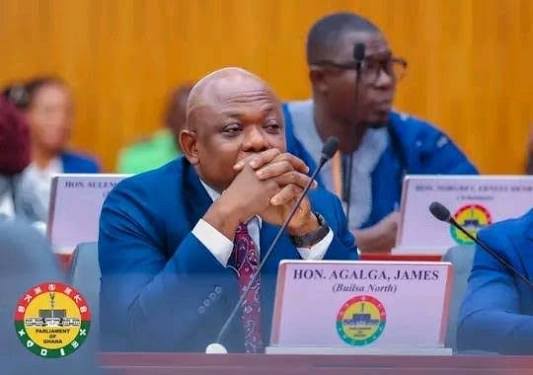
The reshuffle extends beyond the executive branch. With Mahama Ayariga stepping away from his role as Majority Leader in Parliament to take up his new ministerial nomination, Builsa North MP James Agalga has been appointed as the new Majority Leader — a move the Presidency says is intended to ensure continuity in the leadership of the Majority Caucus as Parliament turns its attention to vetting and approving the President’s latest nominees.
Not the First Rumour of Change — But the Real One
It’s worth noting that this reshuffle follows months of speculation. A document purporting to detail a sweeping cabinet reshuffle went viral back in early June 2026, spreading rapidly across Facebook, X, and YouTube and sparking intense public debate — only for the NDC’s Deputy National Communication Officer, Godwin Ako Gunn, to publicly dismiss it as fake. President Mahama himself had signalled that real changes were coming, telling a crowd during his Reset Tour in the Volta Region on July 17 that Ghanaians should “stand in readiness” for further reshuffles as his administration continued to evolve.
What This Means for the Government
For an administration that has operated for a full year with two critical ministries effectively leaderless, this reshuffle represents more than routine reorganisation — it’s a structural repair. Defence and environmental policy are both areas where extended vacancies can quietly erode institutional momentum, from military procurement and security coordination to climate and environmental regulation. Restoring substantive leadership to both should, in principle, allow government business in those areas to move with greater authority and continuity.
The reassignment of Kenneth Gilbert Adjei — who built a track record overseeing housing, water, and infrastructure projects — to Defence is one of the more notable surprises, suggesting the President is prioritising administrative competence and proven delivery over specialist background for this particular post. Similarly, moving Ahmed Ibrahim from Local Government to Works, Housing and Water Resources, while bringing in Ayariga to replace him at Local Government, reflects a broader pattern of redeploying experienced hands into new challenges rather than bringing in entirely fresh faces — a strategy that can offer continuity, though critics may question whether it limits the injection of new perspectives into government.
Politically, elevating James Agalga to Majority Leader also matters for how smoothly Parliament functions in the months ahead, particularly as MPs now take up the task of vetting and approving this very batch of nominees — a process that will be an early test of how efficiently the reshuffled leadership can move government business forward.
The Bottom Line
A year after tragedy left two of government’s most important ministries without substantive leaders, President Mahama has moved to close that gap while simultaneously reshaping leadership in Parliament. Whether the changes translate into a genuinely more effective administration will depend on how quickly the new ministers settle into their portfolios — and how Parliament, under its new Majority Leader, handles the vetting process that now stands between these nominations and their formal confirmation.
Source:
nsemgh
Conversation (0)
- Drop your opinion below.
You must be logged in to comment on this article.
Log In / Register