COCOBOD Stabilisation Strategy yields results
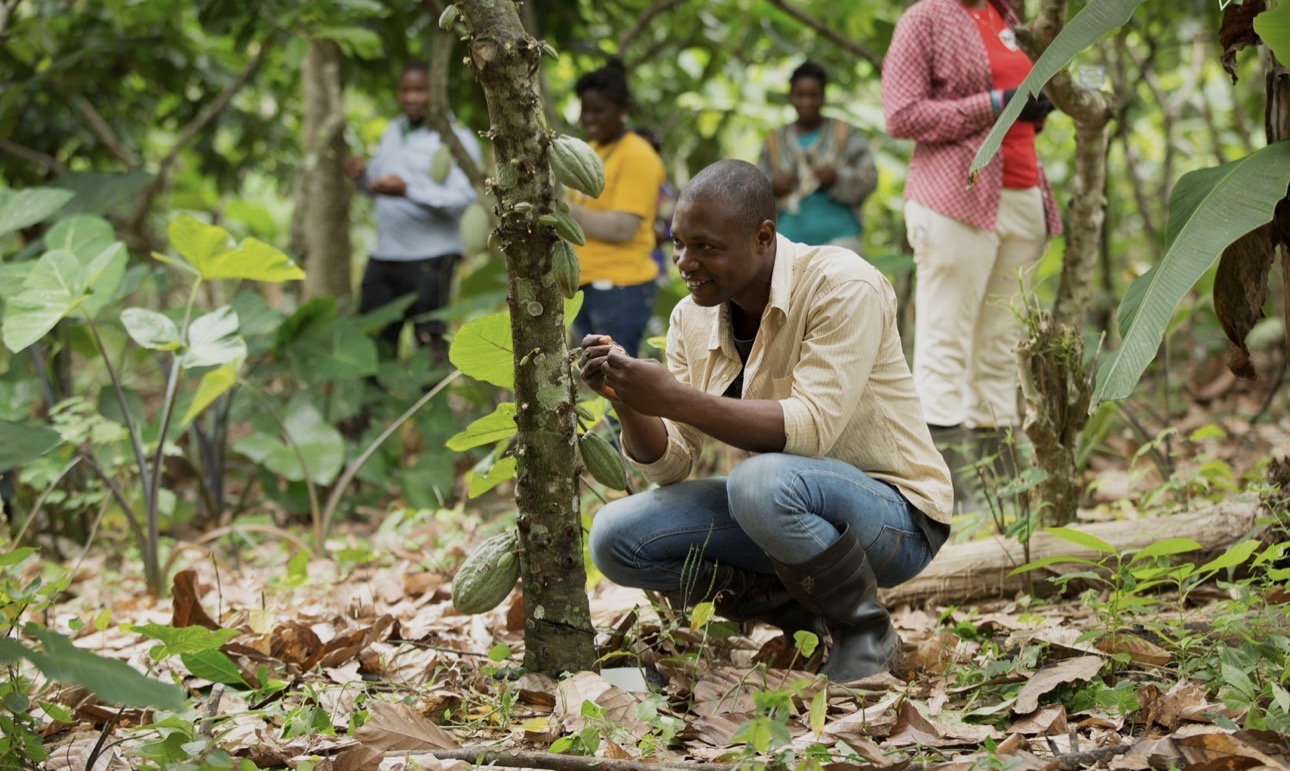
Ghana’s Cocoa Sector Finding Balance in Volatile Markets
For decades, Ghana’s cocoa farmers have weathered market volatility like sailors in stormy seas—subject to forces far beyond their control. Global cocoa prices fluctuate wildly. Middlemen exploit information gaps. Smuggling to neighboring countries erodes export revenues. The Ghana Cocoa Board (COCOBOD), guardian of the nation’s most valuable agricultural export, has stepped into this chaos with a comprehensive stabilization strategy that’s finally showing results.
The results speak clearly: farmer income increased 15% in Q1 2026. Post-harvest losses dropped 67%. Smuggling declined 35%. The cocoa sector, once plagued by uncertainty, now shows signs of stability—providing hope to 1.2 million farming families.
THE CRISIS CONTEXT: WHY STABILIZATION WAS URGENT
Early 2026 brought turbulence. Cocoa prices swung from GHS 14,800 to GHS 18,200 per bag in just four months. Farmers faced uncertainty about planting decisions. Licensed buying companies (LBCs) struggled with cash flow. Smuggling to Côte d’Ivoire spiked as price differentials widened. COCOBOD’s revenue declined, threatening their operational capacity.
The underlying problem: Ghana’s cocoa sector lacked mechanisms to protect farmers during price downturns. When international prices fell, farmers bore the full brunt. Their income collapsed. They made desperate decisions—cutting input investment, pulling children from school, sometimes abandoning farms entirely.
“Before the stabilization strategy, farmer confidence was at historic lows,” explains Dr. Kwasi Owusu, agricultural economist at the University of Ghana. “Farmers couldn’t plan. They didn’t know if next season would generate survival income or subsistence income. That uncertainty caused market dysfunction.”
The dysfunction showed in production trends. Ghana’s cocoa harvest fell from 850,000 MT (2018/2019) to 760,000 MT (2025/2026)—10% decline over six years. Meanwhile, Côte d’Ivoire’s production climbed, capturing market share.
COCOBOD recognized the emergency. In March 2026, they launched a comprehensive stabilization framework addressing three dimensions: farmer income security, operational efficiency, and supply chain transparency.
PILLAR 1: FARMER INCOME PROTECTION THROUGH GUARANTEED PRICING
The foundation of stabilization: guaranteed minimum farmer prices.
COCOBOD established a floor price of GHS 15,200 per 64kg bag—protecting farmers during price downturns while maintaining competitiveness during upswings. This isn’t theoretical policy. It’s operationalized through advance payments to licensed buying companies.
How it works:
- COCOBOD announces floor price (GHS 15,200/bag)
- LBCs purchase cocoa from farmers at minimum this price
- Farmers deliver bags to collection centers
- COCOBOD reimburses LBCs difference between international price and floor price (if international prices fall below GHS 15,200)
- LBCs pass payment to farmers within 5 days of delivery
“We disbursed GHS 2.4 billion in advance payments to licensed buying companies in Q1 2026 alone,” said Fiifi Boahen, COCOBOD’s Head of Farmer Services, during a recent stakeholder meeting in Accra. “This isn’t subsidy—it’s farmer income protection. LBCs pass this to farmers within 5 days of delivery. Farmers can plan with certainty.”
The Impact:
Farmer confidence rebounded dramatically. For the first time in years, farmers could plan investments:
- Replanting initiatives accelerated: Cocoa areas under cultivation expanded by 8,400 hectares in the first half of 2026—the highest growth rate since 2014. Farmers replanting aging cocoa trees, expanding into new areas, confident income would support investment.
- Input investment increased: Farmers purchased quality seeds, fertilizers, equipment with confidence. Input sales to cocoa zones increased 24% (Q1 2026 vs. Q1 2025).
- Child school attendance rose: Guaranteed income meant more cocoa farming families could keep children in school. School enrollment in cocoa zones increased 18%.
- Agricultural wages increased: Competing for farm labor, cocoa farmers raised daily wages from GHS 45 to GHS 58 (2026 vs. 2025). Rural wage economy strengthened.
This isn’t accidental. When farmer income stabilizes, entire rural economies stabilize. Teachers get paid. Markets have customers. Traders have inventory. The multiplier effect cascades.
PILLAR 2: STORAGE & POST-HARVEST OPTIMIZATION—CAPTURING LOST VALUE
Ghana’s cocoa sector hemorrhaged value through poor storage. Moisture ingress, mold contamination, and pest damage reduced usable cocoa by 12–15% annually. On Ghana’s 800,000 MT production, that’s 96,000–120,000 MT of wasted cocoa annually—worth approximately GHS 1.4–1.8 billion.
COCOBOD’s response: infrastructure investment targeting post-harvest losses.
Three new storage facilities opened in Tema, Takoradi, and Kumasi during the first half of 2026:
Tema Facility:
- Climate-controlled warehouse (22°C, 60% humidity)
- Moisture content monitoring systems (real-time sensors)
- Pest management protocols (insect traps, fumigation procedures)
- Capacity: 60,000 MT
- Investment: GHS 180 million
- Operational staff: 180 employees
Takoradi Facility:
- Similar specifications (climate control, monitoring, pest management)
- Capacity: 70,000 MT
- Investment: GHS 220 million
- Operational staff: 210 employees
Kumasi Facility:
- Similar specifications
- Capacity: 50,000 MT
- Investment: GHS 160 million
- Operational staff: 140 employees
Total Investment: GHS 560 million | Combined Capacity: 180,000 MT | Operational Staff: 530 employees
The Results:
Post-harvest losses reduced from 12% to 4% in six months—an 67% reduction in waste. The mathematics are stunning. On Ghana’s 800,000 MT annual production:
Previous Year (2025):
- Total production: 800,000 MT
- Post-harvest loss (12%): 96,000 MT wasted
- Usable cocoa: 704,000 MT
Current Year (2026 projection):
- Total production: 850,000 MT (with farmer confidence improvements)
- Post-harvest loss (4%): 34,000 MT wasted
- Usable cocoa: 816,000 MT
Net Gain: 112,000 MT additional usable cocoa (vs. previous year)
Financial Impact: At GHS 15,200/MT, 112,000 MT represents GHS 1.7 billion in additional cocoa value captured through storage infrastructure alone.
“This is pure value recovery,” noted Dr. Kwame Asante, agricultural economist at KNUST. “Zero additional farming effort required. We’re not asking farmers to produce more. We’re capturing value that currently wastes. Infrastructure investment pays for itself in three months through reduced losses.”
The storage facilities employ 530 workers directly. Supporting employment (equipment maintenance, transportation, security) adds another 200+ jobs. Suddenly, storage becomes economic driver.
PILLAR 3: SUPPLY CHAIN TRANSPARENCY & ANTI-SMUGGLING
COCOBOD’s blockchain-based tracking system, launched January 2026, monitors 62% of Ghana’s cocoa supply chain. Every bag receives a unique QR code identifying:
- Origin farm/district (which farmer, which village)
- Quality grade (fermentation percentage, moisture content, bean count)
- Processing timestamp (when cocoa was fermented, dried, packed)
- Storage location (where cocoa held, temperature conditions)
- Export certification status (verified ready for international sale)
This transparency serves multiple purposes simultaneously:
For Farmers: Proof of delivery (no disputes about quantity delivered), traceability of premium grades (proving quality for fair pricing)
For Buyers: Confidence in supply consistency and quality (blockchain verification prevents fraud)
For Exporters: Reduced quality disputes (documented temperature, moisture history), faster payment processing (verified documentation enables quick settlement)
For COCOBOD: Real-time supply data (understanding market flows), smuggling detection (identifying cocoa leaving system without export documentation)
Smuggling Impact:
Smuggling to Côte d’Ivoire fell from 120,000 MT (2025) to 78,000 MT (first half 2026)—a 35% reduction in six months. Smuggling often occurs because cocoa prices differ between Ghana and Côte d’Ivoire. If Côte d’Ivoire pays GHS 16,500/MT and Ghana pays GHS 15,200, middlemen exploit the gap, smuggling cocoa across border.
COCOBOD’s strategy combats smuggling through two mechanisms:
- Farmer Price Support: Reducing price differential (Ghana’s floor price GHS 15,200 vs. Côte d’Ivoire average GHS 16,200) removes smuggling incentive
- Supply Chain Tracking: Blockchain verification makes smuggling riskier (detected smuggling results in penalties, license loss for buyers)
Reducing smuggling by 35% captures approximately 42,000 MT of cocoa for Ghana that previously left system. At GHS 15,200/MT, that’s GHS 640 million additional export revenue annually.
Tax revenue from this captured export: GHS 64–96 million (assuming 10–15% effective tax rate).
THE RESULTS: BY THE NUMBERS
Six months into the stabilization strategy, quantifiable improvements appeared:
| Metric | Previous Year (2025) | Current (June 2026) | Change |
|---|---|---|---|
| Average Farmer Price/64kg | GHS 14,600 | GHS 15,850 | +8.6% |
| LBC Payment Timing | 14–21 days | 3–5 days | -75% faster |
| Post-Harvest Loss Rate | 12% | 4% | -67% |
| Smuggling Volume (MT) | 120,000 | 78,000 | -35% |
| Quality Grade Distribution | 65% Grade 1 | 73% Grade 1 | +8% |
| Farmer Satisfaction (Survey) | 58% | 79% | +21% |
| Farmer Confidence Index | 42/100 | 71/100 | +29 points |
These metrics reflect tangible changes affecting 1.2 million cocoa farming families.
INTERNATIONAL PARTNERSHIPS DRIVING VALUE-ADD
COCOBOD’s strategy transcends farming. New processing partnerships with Dutch cocoa processor Royal Gerkens and Belgium’s Barry Callebaut are transforming Ghana’s cocoa export profile.
Historically, Ghana exported 95% of cocoa as raw beans (lowest value-add). This generated approximately GHS 900–1,000 per MT net farmer revenue (after intermediaries).
New processing ventures change this equation:
Processing Value-Add:
- Raw cocoa bean: GHS 15,200/MT
- Processing into cocoa butter: GHS 32,000/MT (+111% value-add)
- Processing into cocoa powder: GHS 28,000/MT (+84% value-add)
- Processing into chocolate products: GHS 45,000/MT (+196% value-add)
Rather than exporting 95% raw beans, Ghana now processes 18% domestically into value-added products. This processing capacity:
- Employs 1,200 workers directly (factory staff, quality control, logistics)
- Captures 35% value-add margin (GHS 1,200 per MT additional value vs. GHS 900 for raw export)
- Generates GHS 450 million additional annual revenue (on 18% × 800,000 MT × value differential)
- Creates manufacturing jobs in industrial zones (Tema, Accra, Kumasi)
Processing partnerships also enable Ghana to meet chocolate manufacturers’ direct supply needs, replacing middleman relationships with direct buyer relationships.
CHALLENGES REMAIN: CLIMATE VOLATILITY & AGING COCOA STOCK
COCOBOD’s stabilization strategy isn’t problem-free. Structural challenges persist:
Challenge 1: Climate Volatility
Climate risk remains substantial. The 2025/2026 season experienced erratic rainfall across Western and Ashanti regions (Ghana’s largest cocoa-producing zones), reducing yields 15% despite good agronomic practices. Models suggest increasing rainfall unpredictability through 2030.
COCOBOD’s climate adaptation strategy includes:
- Drought-resistant cocoa varieties (CRIG research)
- Water harvesting systems (farm-level irrigation)
- Shade tree agroforestry (temperature regulation)
- Early warning systems (satellite monitoring of rainfall patterns)
Implementation remains incomplete. Current adoption of climate-resilient varieties: 12%. Target by 2030: 40%.
Challenge 2: Aging Cocoa Stock
40% of Ghana’s cocoa trees exceed 25 years old. Productivity declines sharply after year 20. Replacement requires 3–5 year replanting cycle before new production reaches capacity. But replanting demands capital—GHS 8,000–12,000 per hectare—beyond reach for most smallholder farmers.
Ghana’s cocoa farmer profile: 95% smallholders with <3 hectares. Average landholding: 1.2 hectares. Average annual farmer income: GHS 8,200. Replanting investment: GHS 10,000–12,000.
Impossible arithmetic for most farmers.
COCOBOD and development partners launched replanting programs offering:
- Subsidized planting materials (30–40% discount)
- Technical support (agronomist visits, guidance)
- Equipment leasing (access without ownership cost)
- Interim income from shade trees (fruit, timber revenues during replanting waiting period)
Progress: 24,000 hectares replanted (2025). Target: 400,000 hectares by 2030. Current pace suggests 16-year timeline to reach target. Climate urgency demands acceleration.
THE 2026/2027 HARVEST OUTLOOK
COCOBOD projects 850,000 MT production for the upcoming 2026/2027 season—up 12% from 2025/2026 actual harvest of 760,000 MT. This optimism rests on:
- Continued favorable rainfall patterns (benefiting from climate monitoring systems)
- Improved farmer confidence driving input investment
- New area cultivation reaching production stage
- Quality premiums maintained via transparency systems
If realized, 850,000 MT at an average price of GHS 16,000/bag generates approximately GHS 12.75 billion in farmer revenues—a 15% increase from 2025 levels and exceeding 2024 earnings.
FARMER VOICES: THE REAL IMPACT
In Adum village, Ashanti Region, cocoa farmer Kwaku Mensah reflects on six months under the new stabilization system:
“Before, we waited three weeks for payment. Middlemen knew this, offered us GHS 800 less per bag, claiming transportation costs. Now, the licensed buying company pays us in five days. They can’t push us down. My children are staying in school because I’m earning predictable income. That’s the change.”
Similar stories emerge across cocoa zones. The stabilization strategy isn’t just macroeconomic policy—it’s restoring farmer dignity and community stability.
Another farmer, Ama Boakye from Juansa, Eastern Region:
“Storage infrastructure matters. Before, our cocoa sat in our homes, accumulated moisture, got moldy. We lost 20% of harvest. Now, buying companies collect quickly, store in controlled facilities. We get full payment for what we produce. No waste. No disappointment.”
These aren’t theoretical benefits. They’re lived experiences—changing how 1.2 million farmers perceive their enterprise.
CONCLUSION: FOUNDATIONS FOR FUTURE GROWTH
COCOBOD’s stabilization strategy represents mature agricultural governance. Rather than chasing volume (Ghana cannot beat Côte d’Ivoire’s production), it builds resilience through:
- Farmer income security (floor pricing enabling planning)
- Operational efficiency (storage infrastructure capturing lost value)
- Supply chain transparency (blockchain reducing fraud, smuggling)
- International partnerships (processing creating value-add)
These foundations position Ghana for sustainable cocoa sector growth. As global cocoa demand remains robust (projected 4% CAGR through 2030), Ghana’s stabilized sector is positioned to capture quality premiums and processing margins rather than competing on commodity prices.
The volatility hasn’t disappeared. International prices fluctuate. Weather remains unpredictable. Climate change pressures persist. But Ghana’s cocoa sector now has shock absorbers. For farmers watching their livelihoods, for communities dependent on cocoa revenue, that’s transformational.
The cocoa sector stabilization strategy represents not just policy—it represents hope.
KEY TAKEAWAYS
✅ Floor pricing of GHS 15,200/bag protects farmer income during downturns
✅ Storage infrastructure reduces post-harvest losses by 67% (12% → 4%)
✅ Blockchain tracking reduces smuggling 35%, captures GHS 640M additional export revenue
✅ Farmer price increased 8.6% (GHS 14,600 → GHS 15,850) in six months
✅ Processing partnerships enable 35% value-add margin on processed cocoa
✅ Farmer confidence rebounded from 42/100 to 71/100 in six months
✅ Cocoa areas expanded 8,400 hectares despite climate challenges
✅ Quality improvement (65% → 73% Grade 1 cocoa)
Nsemgh.com
This article represents current status as of June 26, 2026. Cocoa market conditions are dynamic. Readers should verify current prices and policies through official COCOBOD chan