GoldBod’s New Gold Coins: How Ordinary Ghanaians Can Now Invest in Gold
For decades, Ghana has mined and exported gold in vast quantities — yet very few Ghanaians have ever owned a piece of it as an investment. That’s beginning to change. Between the Bank of Ghana’s Ghana Gold Coin and the Ghana Gold Board’s (GoldBod) newer plans for digital gold tokens, citizens now have real, structured pathways to invest in the country’s most valuable natural resource. Here’s what’s on offer, and how to get involved.
What Is GoldBod, and Why Does It Matter?
The Ghana Gold Board (GoldBod) was established in March 2025 under the GoldBod Act, 1140, as the state’s central authority for buying, aggregating, and exporting gold from artisanal and small-scale miners. Its core mission has been to curb smuggling and bring Ghana’s gold trade “out of the shadows” — and by most measures, it’s working. Between January 2025 and May 2026, GoldBod spent over $16 billion purchasing gold from licensed miners, helping drive a current account surplus and a stronger cedi.
But GoldBod’s ambitions go beyond exports. The agency has been vocal about wanting ordinary Ghanaians to directly own a share of the country’s gold wealth, rather than seeing it flow abroad while citizens save in cedis or foreign currency.
Pathway 1: The Ghana Gold Coin (GGC)
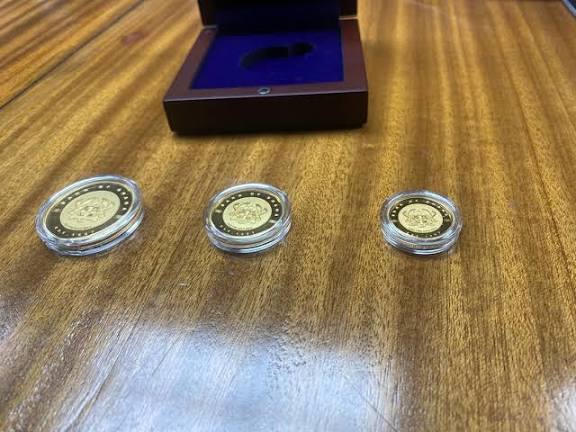
The most established option right now is the Ghana Gold Coin, issued and guaranteed by the Bank of Ghana. Here’s what investors need to know:
- Purity: Refined to 99.99% purity, using responsibly mined Ghanaian gold.
- Sizes: Available in three denominations — 1 oz, ½ oz, and ¼ oz — so investors can choose an amount that fits their budget.
- Minimum investment: Historically, buyers have needed at least around GH¢10,000 to purchase a coin, with pricing that moves in line with world gold prices.
- Where to buy: The coins are distributed through commercial banks, making them accessible to anyone with a bank account rather than requiring a stockbroker or specialised platform.
- Who can buy: For now, the GGC is designed for Ghana-resident investors. The Bank of Ghana is reportedly working on platforms to extend access to the diaspora, but those channels aren’t yet live.
Importantly, the GGC is not legal tender — it’s a specialised investment asset, much like buying a gold bar, and its value is meant to track the international gold price over time as a hedge against inflation and currency depreciation.
Pathway 2: Digital Gold Tokens — Investing From as Little as GH¢15
The bigger shift on the horizon is GoldBod’s push toward gold tokenisation — breaking gold ownership into small, affordable digital units backed by real physical gold. Speaking at the Money Summit 2026 in Accra, GoldBod’s Director of Finance, Dr. George Baah-Danquah, announced that entry-level investment could start from as little as GH¢15.
The idea is simple: instead of needing thousands of cedis to buy a physical coin, a Ghanaian could buy a small digital “slice” of gold, with ownership recorded and backed by the underlying physical asset. GoldBod has already been admitted into the Securities and Exchange Commission’s regulatory sandbox under the Virtual Asset Service Providers Act, 2025 — meaning the product is being tested under close regulatory supervision before a wider public rollout.
Beyond tokenised coins, GoldBod has also floated the idea of gold-backed securities — financial products that could lower borrowing costs and expand access to credit by using gold as collateral within the wider financial system.
Why This Matters for Ordinary Ghanaians
Advocates argue that a genuine “gold investment culture” could do for Ghana what it has long done in countries like India and China, where households routinely hold gold as a store of value and a hedge against inflation or currency swings. Right now, most of Ghana’s gold wealth flows out as export earnings, with very little of it retained as personal savings by citizens.
By combining:
- Bank-distributed physical coins (for those with more capital to invest), and
- Low-entry digital tokens (for everyday savers),
GoldBod and the Bank of Ghana are aiming to make gold ownership possible at almost every income level — while also reducing the country’s reliance on the US dollar as the default store of value.
What to Watch For
A few things are still developing:
- The tokenisation product is not yet fully public — it remains in a regulatory sandbox, so full nationwide access isn’t confirmed yet.
- Diaspora access to the GGC is still being built out, so Ghanaians abroad can’t yet buy in directly.
- Gold prices fluctuate, and GoldBod itself has acknowledged that a recent dip in world prices affects its own revenue projections — a reminder that, like any investment, gold carries market risk.
The Bottom Line
For the first time, Ghanaians have real, government-backed pathways to invest directly in gold — from the more established Ghana Gold Coin available through commercial banks, to an upcoming digital token system that could let citizens start investing with as little as GH¢15. As these mechanisms mature, they could reshape how everyday Ghanaians save and protect their wealth — turning a resource the country has long mined for the world into one its own citizens can finally own a piece of.
Source:
nsemgh