Ghana’s Cocaine Problem: How a €225 Million Bust and a Presidential Family Scandal Are Reshaping the World’s View of the Country
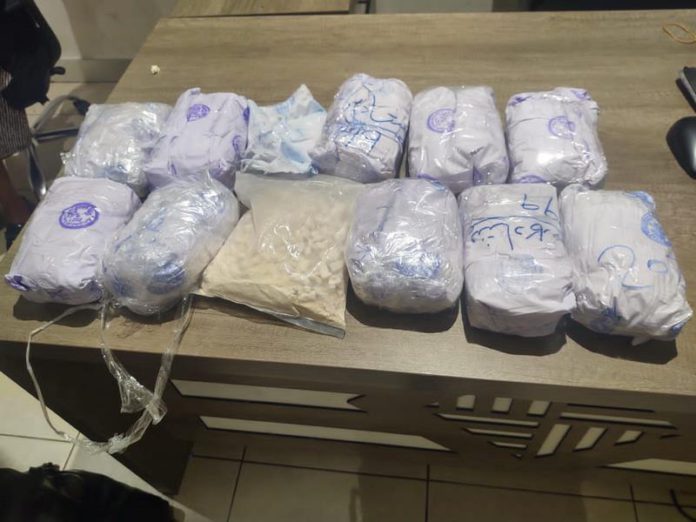
A single shipping container, declared as plastic waste and bound for Antwerp, has thrust Ghana into the centre of one of West Africa’s most consequential drug trafficking scandals in years — one that now directly implicates the family of a sitting head of state and has forced Ghana’s own government into emergency security meetings at the highest level.
The Bust That Started It All
On September 7, 2026, French customs officers at the Port of Dunkirk intercepted a shipment of nearly four tonnes of cocaine, concealed inside 167 bales hidden within a container of plastic waste. The consignment, which had originated in Ghana, carried an estimated street value of roughly €225 million — about US$261 million. It ranks among the largest cocaine seizures publicly linked to Ghana in recent memory.
French and Dutch investigators quickly traced the shipment to the criminal network of Jos Leijdekkers, a 34-year-old Dutch fugitive known internationally as “Bolle Jos” — one of Europe’s most wanted drug traffickers.
The Presidential Family Connection
What has elevated this case from a routine (if large) narcotics bust into a genuine diplomatic embarrassment is Leijdekkers’ personal life. He is believed to be hiding in Sierra Leone, where he has reportedly been in a relationship with a daughter of Sierra Leonean President Julius Maada Bio — with Dutch tabloid De Telegraaf reporting last year that the two have had a child together. Leijdekkers has also been seen in videos alongside President Bio himself, footage that has circulated widely and been examined by journalists across Europe and West Africa.
Sierra Leonean authorities have consistently and publicly denied that Leijdekkers is in the country, even as international investigators and multiple news organisations continue to place him there. Leijdekkers is already a convicted fugitive several times over — sentenced in absentia to 24 years in prison by a Rotterdam court for smuggling seven tonnes of cocaine, an armed robbery in Finland, and ordering a murder, and separately handed lengthy sentences by Belgian courts for a foiled attempt to raid a customs warehouse and retrieve 10 tonnes of previously seized cocaine. Dutch police also suspect his involvement in the disappearance and suspected killing of a woman in Amsterdam in 2019. Both Europol and Dutch authorities are offering a €200,000 reward for information leading to his arrest.
The Ghana Arrests
Ghana’s Narcotics Control Commission (NACOC) moved quickly following the Dunkirk seizure, announcing on September 14, 2026, the arrest of three suspects accused of representing and facilitating Leijdekkers’ activities within the country. Days later, on September 16, four additional suspects — Desmond Koranteng Curiel (alias “Paul Kweku Yeboah” or “Biggs”), Musah Attah (alias “Kromo”), Kweku Otchere, and Jessica Hartog, all linked to Ghana’s East Legon area — were arraigned before the Accra High Court over an alleged conspiracy to export roughly four tonnes of cocaine from Ghana to France. They were remanded in custody for four weeks, with Leijdekkers himself formally listed as a fifth accused person in the case, despite remaining at large abroad.
NACOC struck a defiant tone in its public statement, insisting the arrests reaffirm the Commission’s resolve that Ghana “will not be a safe haven, transit point or operational base for international drug-trafficking organisations.”
Ghana’s Government Response
The scale of the bust — and the international attention it has drawn — has clearly rattled officials in Accra. President John Dramani Mahama personally chaired a high-level meeting of security chiefs to be briefed on the investigation, while the Jubilee House convened a separate high-level security meeting bringing together the Ministers for the Interior and Transport alongside heads of key security agencies. The agenda reportedly covers a review of existing security vulnerabilities, intelligence-sharing arrangements, cargo and passenger screening systems, inter-agency coordination, and the deployment of technology to detect and disrupt narcotics trafficking through Ghana’s ports, airports, and land borders.
Notably, this Dunkirk case is not an isolated incident. It follows closely on the heels of another major operation in which NACOC and Ghana’s Bureau of National Investigations (BNI) arrested a key suspect linked to a separate $296 million methamphetamine shipment bound for Australia, also traced back to Ghana — reinforcing a pattern that has increasingly placed the country, and West Africa more broadly, in the international spotlight as a transit hub for narcotics headed to Europe, Australia, and beyond.
How the World Is Watching
For a country that has spent years cultivating a reputation as one of Africa’s more stable democracies and business-friendly economies, back-to-back multimillion-dollar drug busts traced to its ports carry real reputational cost. International media coverage of the Dunkirk seizure has repeatedly emphasised Ghana’s role as the shipment’s origin point, and the case’s entanglement with a sitting West African president’s own family only amplifies global attention on the wider region’s vulnerability to organised narcotics networks. For trade partners, shipping insurers, and foreign investors evaluating risk, incidents like this one feed directly into perceptions of weak port security and regulatory gaps — perceptions that can prove far more damaging, and far slower to reverse, than the immediate scandal itself.
Recommendations for Government
Given the scale of what’s now at stake — both for national security and for Ghana’s international standing — several concrete steps are worth government’s urgent consideration:
- Invest in comprehensive container-scanning technology at all major ports. The Dunkirk shipment evaded detection while disguised as plastic waste; modern scanning infrastructure at Tema and Takoradi, capable of flagging anomalies in declared cargo, would make this kind of concealment significantly harder to pull off undetected.
- Tighten oversight of freight forwarding and export documentation processes. Given how easily a multi-tonne shipment was falsely declared, a review of who is authorised to certify export cargo — and stronger penalties for falsified declarations — should be a priority.
- Strengthen international intelligence-sharing with European and Australian counterparts. This case was cracked because French, Dutch, and Ghanaian authorities worked together. Formalising and resourcing these partnerships further, rather than relying on reactive cooperation after each bust, would help identify trafficking networks before shipments leave Ghanaian soil.
- Investigate and prosecute any domestic complicity thoroughly and transparently. For four tonnes of cocaine to move through a Ghanaian port undetected, some degree of local facilitation is likely. A transparent, well-resourced investigation into potential insider involvement — at ports, in logistics companies, or within regulatory agencies — is essential both for justice and for public confidence.
- Engage diplomatically with Sierra Leone on the Leijdekkers situation. Given his alleged direct ties to Ghana-based trafficking operations, Ghana has a legitimate interest in pressing for clarity from Freetown regarding his whereabouts and any protection he may be receiving, however diplomatically sensitive that conversation may be.
- Follow through on prosecutions with full transparency. Ghana’s credibility on this issue will ultimately be judged not by how many arrests are announced, but by how those cases conclude. Ensuring the current suspects face a fair, transparent, and thorough judicial process — without any hint of the case quietly fading from public view — will matter enormously for both domestic and international confidence.
- Communicate proactively with international partners and media. Rather than allowing foreign coverage to define the narrative solely around Ghana’s role as an origin point, government agencies like NACOC should continue the kind of direct, confident public communication already seen in this case — but pair it with regular updates as investigations and prosecutions progress.
The Bottom Line
This case has placed Ghana at the uncomfortable intersection of international organised crime and West African politics, with a fugitive drug lord’s personal ties to a neighbouring head of state adding a layer of intrigue that has only intensified global scrutiny. How decisively Ghana’s government responds — not just in the immediate arrests and security meetings, but in the months of prosecutions and reforms that follow — will go a long way toward determining whether this becomes a turning point in port security, or simply another chapter in a worsening pattern.
Source:
nsemgh
Conversation (0)
- Drop your opinion below.
You must be logged in to comment on this article.
Log In / Register