Flooding in Weija due to illegal structures, not dam spillage — GWL
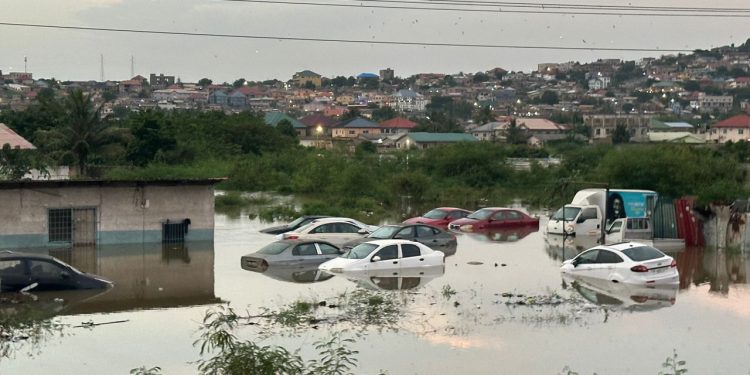
The Director of Communications at Ghana Water Ltd. (GWL), Stanley Martey, has called for stronger enforcement of planning and environmental regulations in flood-prone communities around Weija, saying human activities rather than dam operations are driving the recurring flooding in the area.
His comments come amid concerns from residents who have linked recent flooding in parts of Weija to the controlled spillage of the Weija Dam, which has displaced some households following heavy rains.
Mr Martey, however, insists that the situation reflects long-standing challenges with settlement planning and poor enforcement of building regulations in waterways and buffer zones.
Speaking on Citi News Digest with Samuel Ackom on Saturday, May 30, he maintained that the area’s natural vulnerability, combined with recent heavy rainfall, is the primary cause of the flooding.
“The current devastation that we are seeing in the area is not caused by the spillage of the excess water from the dam. No. The area is already a flood-prone area, and in recent times, you’ve seen very heavy rain. That is what is causing the flooding,” he said.
He explained that unregulated construction in waterways has significantly worsened the situation, despite repeated warnings to halt such developments.
“A lot of people are putting up structures in unauthorized places. People have occupied even the waterway. People are filling the middle of the waterway and putting up buildings, and we have been warning against these things,” he stated.
Mr Martey also expressed concern over what he described as weak enforcement by local authorities, which he said has allowed encroachment to continue unchecked.
“The district assembly is sitting aloof and not ensuring that these unauthorized structures are demolished or people are stopped from putting up these unauthorized structures. That is the problem. It is not the spillage of the dam that is the problem,” he said.
He further defended the dam’s operational procedures, explaining that controlled spillage is a safety requirement meant to prevent catastrophic failure.
“If we do not spill excess water from the dam, then there’s the possibility of the dam collapsing. And when it collapses, what you are seeing now is just the tip of the iceberg. It’s going to be more terrible than we are seeing now,” he warned.
Mr Martey disclosed that the Weija Dam has been spilling continuously since April 2025, adding that rainfall patterns in the Atiwa Forest, where the Densu River originates, continue to feed inflows into the dam.
He noted that the duration of the current spillage remains uncertain due to changing weather conditions and upstream rainfall patterns.
Mr Martey called for a coordinated response involving evacuation of residents in high-risk zones, strict demolition of unauthorised structures, and dredging of waterways to restore natural drainage systems.
He added that restoring buffer zones around water bodies would be key to reducing future flooding incidents in affected communities around Weija.